
A new geologic epoch is here
Many believe that we have come to the end of a geologic era, a major subdivision in the earth’s history. That era (or epoch, as specialists call it), the Holocene, ran steadily for almost twelve thousand years, with predictable seasonality, a stable climate around the globe and stable conditions for its animal and plant life. The geographic ranges of vegetation types were settled, and with that, the ranges of most birds.
Human actions and attitudes throughout our history have taken planetary stability for granted, and assumed an unchanging reality since time immemorial. That stability is no more. The new epoch, usually called the Anthropocene, instead offers its changes as moving targets that break from historical patterns. The term Anthropocene emphasizes the central role of humankind in today’s geology and ecology. In this new category of history, there are irreversible changes to the way the Earth’s physical and biological systems work, due to an accumulation of human actions.
Since the middle of the twentieth century, industrialization, population, pollution, and more, have ratcheted up significantly. All the warmest years since the time of Christ have occurred after 1990. Humans and our domestic animals now make up more than ninety percent of the mass of all vertebrates. We are taking to ourselves almost forty percent of the earth’s primary productivity in the plants we eat, the plants we feed to the animals we eat, and the forests we raze to build our cities and homes.
When the earth last shifted into a new geologic subdivision, out of the Pleistocene epoch (the Ice Age), there was profound ecological change, including mass extinctions. What had been a safe operating space for living things was destabilized.
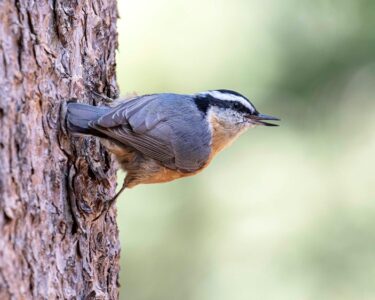
It seems reasonable that unpredictable and shifting conditions of climate and vegetation can prompt surprising behavior from previously well understood animals, including birds. There are many possible examples from Yolo County. Three species ordinarily wintering in southern Mexico showed up here in the last two winters– broad-billed hummingbird, ruddy ground dove, and summer tanager. Species normally breeding in the mountains or far north of here have appeared in summer in the past few years—sandhill crane, American dipper, Townsend’s warbler, yellow-rumped warbler, pine siskin, white-crowned sparrow, golden-crowned sparrow, and red-breasted nuthatch. One of the latter tried to nest in Davis this year. Say’s phoebe has recently begun to breed here.
Our ability to predict new behaviors is still weak. For example, I had thought that northern California’s summer visitor species might expand their breeding ranges northward with a warming climate. Instead, it has been our non-migratory residents that have increasingly colonized Oregon and Washington—including great egret, red-shouldered hawk, Anna’s hummingbird, western scrub jay, black phoebe, lesser goldfinch, and great-tailed grackle. Perhaps they are responding to warmer winters, not warmer summers.
I had also thought that species that are near or at the southern limit of their winter ranges in Yolo might retreat northward, making them increasingly scarce locally. But my analysis of records of red-breasted nuthatch, golden-crowned kinglet, varied thrush, pine siskin, red crossbill and evening grosbeak shows no clear trends in this century.
For the future of local birding, it is safe to say that there will be many more surprises, but less understanding of the reasons for them. Go find them.
For an account of the recent and continuing loss of diversity of life forms in the new era, see the book, The Sixth Extinction, by Terry Glavin, and articles by Will Steffen. A list is at Wikipedia.org/wiki/Will_Steffen.
— Michael Perrone, Conservation Chair