
Putah Creek Christmas Bird Count 2024 Summary
By Bart Wickel
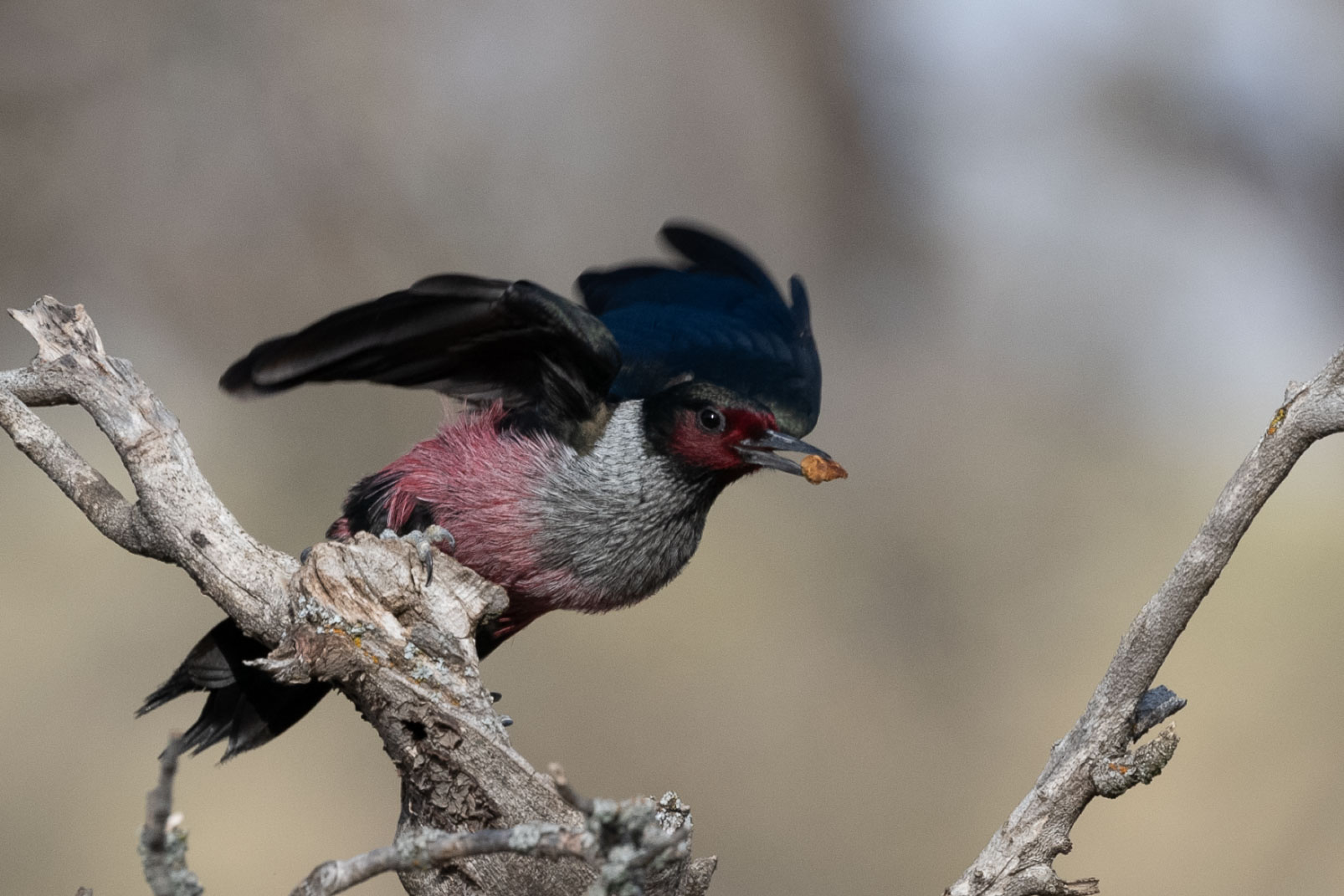
Lewis’s Woodpecker ©Kelli O’Neill
The 54th edition of the Putah Creek Annual Christmas Bird Count, supported by the Yolo BIrd Alliance (formerly Yolo Audubon) was held on December 15, 2024. This count has been held every year since 1971. For the first time all count results were entered in eBird (see trip report below the summary)!
This year we had a record breaking participation with 102 participants. Participants were distributed over 10 areas in over 40 teams and led by experienced birders accompanied by new or less experienced birders. Our count circle is centered on the bridge at Lake Solano and covers the upper reaches of Putah Creek and surrounding areas with a diameter of 15 miles.
Weather: Parts of the count circle were covered in fog at the beginning of the day and clear skies at higher elevations. Conditions on the count day were pleasant with temperatures ranging from 36 to 52 degrees, partial high cloud cover and with low winds from the NE (up to 9 mph).
Highlights: This year we tied with the 2001 record of 147 species. By far the most stunning bird was a Cassin’s Kingbird, found by the team in Area 6.
High counts: Cackling Goose (35), California Quail (998), Say’s Phoebes (99), Lewis’s Woodpecker (226), Horned Lark (1119), Blue-gray Gnatcatcher (17), Sora (17), Great Horned Owl (156).
West-Nile Virus recovery: After a decade of constant decline numbers of Yellow-billed Magpie (153) and Loggerhead Shrike (26) are finally coming back with both species close to a doubling in numbers over 2023. Both species were heavily affected by the West Nile Virus in the past.
Fire recovery: While observing the impacts of the LNU Lightning Complex mega-fire, which burned approximately 60% of the count circle in August 2020, we continue to see sustained low numbers of Canyon Wrens (1), California Thrashers (3). Wrentits (47) however seem to be making their continued comeback at higher elevations compared with 11 in 2021, 16 in 2022 and 25 in 2023. Another species that was absent from the count circle after the fires until last year, when the first one was seen again, was the Pileated Woodpecker (4).
Waterfowl: Waterfowl numbers continued to be low, likely due to the mild conditions farther north. Green-winged Teal, Ring-necked Duck, Lesser Scaup, American Wigeon, Common Merganser, Ruddy Duck, American Coot continued at historically low numbers. We did observe record numbers of Mallard (308) though.
Owling: Historically our count circle has led the nation in record high numbers for Great-horned Owls during CBCs. Given concerns about potential double counting, we are following a rigorously laid out protocol that makes sure this doesn’t happen. This year we continued shattering our previous all time records of Great-horned Owls (156). Unlike the past year when we saw record numbers of Barn Owls and Western Screech-Owls this year we did not come close at all. One explanation could be the rain in the past days which resulted in the creeks of Gates, Mix and other canyons flowing at full force and producing a lot of noise, muting calls. Another explanation could be that during full moon many Owl species tend to vocalize less.
eBird: Our eBird TRIP REPORT with 193 checklists for the day provides a more detailed overview of the species that were counted. Note that some species counts have been adjusted in the final compilation due to overlapping observations by different areas. As a result the numbers on eBird differ from the final tallies.

2023 Putah Creek CBC Summary
By Bart Wickel
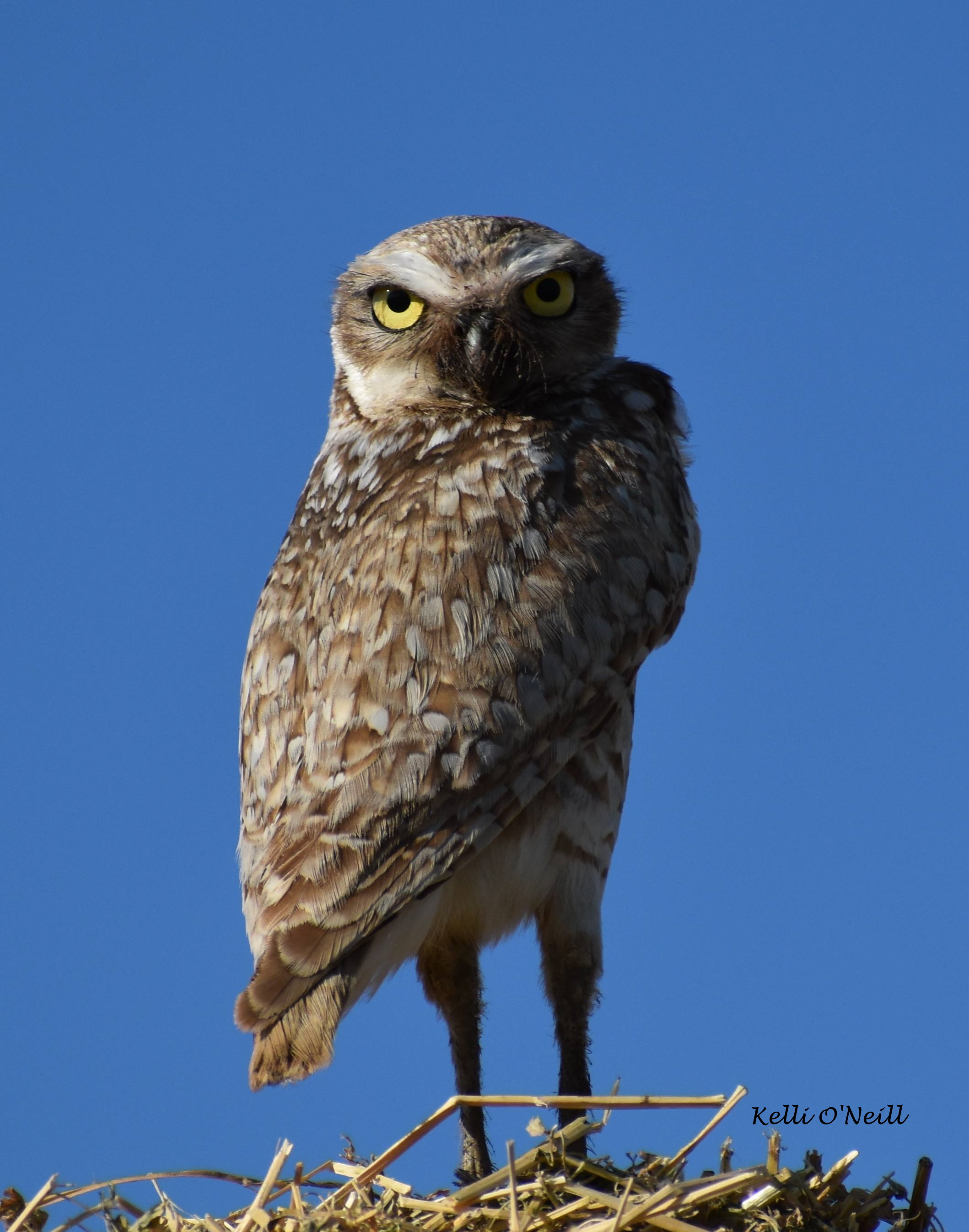
Burrowing Owl ©Kelli O’Neill
For the 53rd time since 1971 the Putah Creek Christmas Bird Count (CBC) was successfully completed on December 17th, 2023.
Our regular count circle was covered by 89 participants distributed over 32 teams led by experienced birders accompanied by new or less experienced birders. With a collective 213 party hours we successfully covered the usual survey routes of approximately 318 miles within the count circle.
Conditions on the count day were initially quite pleasant (low of 42 F, high of 59 F) and with low winds (up to 7 mph) but around 1:30 PM a light drizzle arrived leading to suboptimal count conditions.
The final tally for this year was 142 species. This includes two species (Black-throated Sparrow and Canyon Wren) which were observed in the count week time frame.
We observed new all time high counts for California Quail (961), Mourning Doves (677), Black Phoebes (277), Say’s Phoebes (90), Orange-crowned Warblers (20), Western Tanagers (10), Great Horned Owl (134), Barn Owl, Red-tailed Hawks (235) and Cooper’s Hawks (31).
After a decade of constant decline Yellow-billed Magpie (152) and Loggerhead Shrike (9) reached their all-time low counts.
The rarest birds observed during this year’s count was a Winter Wren (area 9 – Lake Solano) and a Long-eared Owl and Northern Saw-whet Owl (both in area 1 – Quail Ridge Preserve). None of these species were a first to the count.
While observing the impacts of the LNU Lightning Complex mega-fire, which burned approximately 60% of the count circle in August 2020, we continue to see sustained low numbers of Canyon Wrens (1) and California Thrashers (3). We did, however, have one Pileated Woodpecker for the first time in many years outside of the area that was burned. Wrentits (25) seem to be making their continued comeback at higher elevations compared with 11 in 2021 and 16 in 2022.
Owls: Historically our count circle has led the nation in record high numbers for Great-horned Owls during CBCs. Given concerns about potential double counting, we are following a rigorously laid out protocol that makes sure this doesn’t happen. This year we shattered our previous all time record of Great-horned Owls (134) and Barn Owls (30). For Western Screech-Owls (33) we almost tied with our all time record last year (34). Northern Pygmy-Owls (4) were lower than we expected, and for the 5th time on the count we had a Northern Saw-whet Owl as well as a Long-eared Owl (Area 1).
The strong numbers of owls and day-time birds of prey (most notably Red-tailed Hawks and Cooper’s Hawks), especially seem to be correlated with an (anecdotally) high presence of rodents in the previously burned parts of the count circle.
Waterfowl: Waterfowl numbers were unusually low, likely due to the mild conditions farther north. Green-winged Teal, Ring-necked Duck, Lesser Scaup, American Wigeon, Common Merganser, Ruddy Duck, American Coot all were at, or close to, historically low numbers.
Our eBird TRIP REPORT with 142 checklists for the day provides a more detailed overview of the species that were counted.