
Habitat Improvements by the Yolo County Resource Conservation District
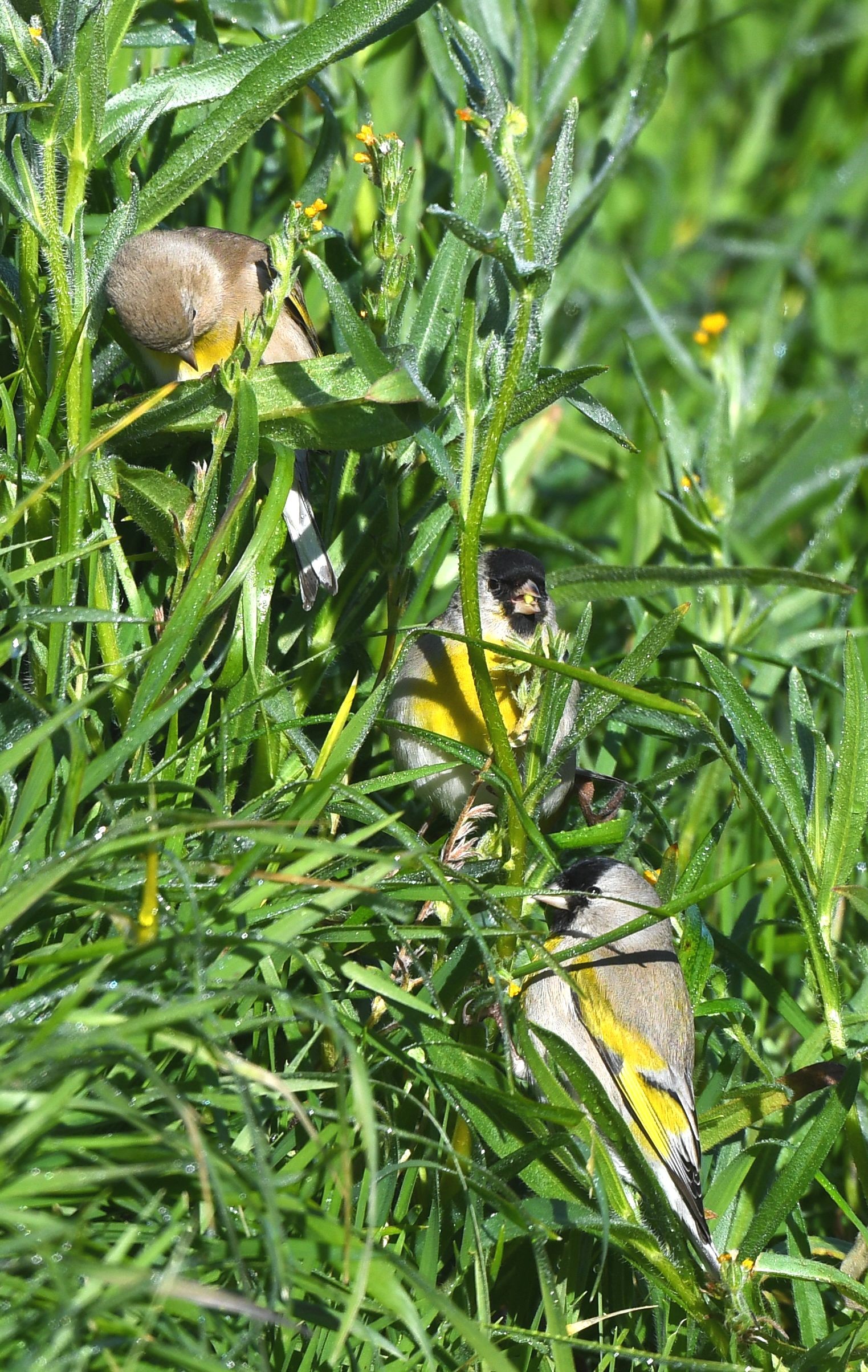
Lawrence’s Goldfinches Eating Fiddleneck ©Josh Greenfield
One of the missions of the Yolo County RCD is to remove weeds and put bird-friendly native plants in their place, all normally done away from the spotlight. So, I am going to shine a light on some of its recent activities, funded by a grant from the State Wildlife Conservation Board. The work has taken place at the public Fishing Accesses in Putah Canyon, the Yolo Bypass Wildlife Area, Audubon California’s own Bobcat Ranch, and on a City of Davis property east of town.
On the California Department of Fish and Wildlife properties at Fishing Access #1 and #4, the RCD cleared the weeds and planted pollinator-friendly species from local stock, including milkweed, gumplant, pipevine and native grasses. They will be able to expand the planted area in the next two years. The plants are watered in the first year, then left on their own to attract bees and butterflies. This summer, over 50 monarch caterpillars are using the new milkweed plants, nibbling them down to the stem.
At the Yolo Bypass Wildlife Area, the RCD had done an earlier planting south of the auto tour loop, and CDFW staff urged them to do more. So next year, there likely will be plots at the wildlife area headquarters, near Parking Lot B, and at a site off the beaten path. Also, the half-acre demonstration native plant garden at Parking Lot A will be expanded.
Last winter the RCD made a small planting at the so-called “Spring Marsh” on the bird survey route on Bobcat Ranch, again consisting of pollinator-attractive species.
The remaining effort helped carry out a “carbon farm plan” for the City of Davis by installing three hedgerows totaling over a half mile on a farmed City property east of town: one at the east end of County Road 30, near the west levee of the Yolo Bypass, one in the center of the farm, and another section is near a cell phone tower. Plant species include coyote bush, mulefat, milkweed, gumplant, deergrass and alkali sacaton grass, chosen for their tolerance of the alkaline soil at the site.
This fall the RCD is working with the City of Woodland on a large habitat improvement project to the area variously called North Regional Pond or (the official name) Pacific Flyway Pond, at the east end of Gibson Road in Woodland. Earth-moving (grading) this fall will make small islands to serve as safe resting places for waterbirds, and also create a gradually sloped shoreline to provide permanent mudflats for foraging shorebirds. Native grasses, shrubs and pollinator plants will be installed after the earthwork is complete.
For more information about these many improvements for the local native flora and fauna, contact Tanya Meyer here.side.
— Michael Perrone, Conservation Chair