Conservation Corner

The Yolo Bypass Wildlife Area

The Yolo Bypass Wildlife Area is in many respects the best all-around collection of birding sites in the county, drawing birders from far and near. Its attraction for water-oriented birds lies in part from its being the single largest remnant of the natural floodplain of the Sacramento River, often flooding

Read More
Tricolored Blackbird; © Lynda Goff

News About Tricolored Blackbirds

In recent years California has been home to all of the nesting tricolored blackbirds in the world, and almost all of the breeding birds have been in the Central Valley.  This year in Yolo County about 25,000 birds colonized Conaway Ranch at a site north of Road 25 and east

Read More
Western Meadowlark; © Deb Ford

2022 Audubon Advocacy Day

On August 3rd, as part of Audubon California’s annual legislative advocacy day, local Audubon members from all over the state met with 45 state legislative offices to advocate for birds and communities. Here in Yolo County several of us with Yolo Audubon Society met via Zoom with our local representative,

Read More
Blue Grosbeak; © Erna Tarara

The Putah Creek South Fork Preserve

About two miles south of Davis, on the east side of Mace Boulevard, lies the South Fork Preserve. The 110-acre site includes big trees close to the creek, a younger plantation of native trees and shrubs, and a weedy grassland, all on former farmland. It has become decent habitat for

Read More

Nest Box Monitoring Reports

Text and photos by Sonjia Shelly, YAS Board Nest box monitoring at North Davis Channel TRES=tree swallow; WEBL=western bluebird; HOWR=house wren; HOFI=house finch Monitoring began 2/24/22 and ended 7/18/22 Observers included Zane Pickus, Ina Rommeck, John Hansen and Sonjia Shelly Nest building was evident as early as 3/18/22 by TRES

Read More
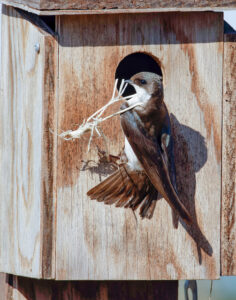
Tree Swallow bringing nest material to box; © Erna Tarara

Woodland Regional Park Preserve

The Woodland Regional Park Preserve is a 160-acre parcel in the southeast corner of Woodland, just east of Road 102 and south of Road 25. It is the newest park in the county, and still in development. The City of Woodland and a partnership of local nonprofits, including Yolo Audubon,

Read More
Say's Phoebe; © Sarah Mayhew

Wildhorse Golf Course Agricultural Buffer

Birding the same patch over a long span of time is always rewarding. I have walked part of the Wildhorse Ag Buffer regularly for the last several years. I like it because a few minutes on foot gets me out of urban Davis onto the edge of farmland and a

Read More
Whooping Crane; sketch by Alison Kent

Rare bird reports—then and now

The basis for acceptance of reports of unusual birds has changed over the years, and continues to evolve. From the beginning of bird study in America to well into the 1950’s, reports of rare birds were seldom taken seriously by the authorities, namely, professional ornithologists, except over the barrel of

Read More
Swainson's Hawk; © Ann Brice

The Yolo Habitat Conservancy Revisited

The Yolo Habitat Conservancy is an arm of county government whose chief job, so far, is to oversee a coherent approach to mitigation for impacts of development and other land disturbances.  Projects that degrade or eliminate habitat for certain plant and animal species can get permits to do so by

Read More
Tundra Swans taking flight from Rivergarden Farms; © Ann Brice

River Garden Farms

From Knights Landing to a bit past the Colusa County line, the land along State Highway 45 and over to the Sacramento River belongs to River Garden Farms.  It supports crops from alfalfa to watermelons in the growing season, and a remarkable variety of birds in winter. Three thousand acres

Read More
Scene from video by Mark Jones

Off-highway Vehicles in Cache Creek

The November issue of this newsletter noted that the Yolo County Board of Supervisors had voted in October to ban off-highway vehicles (OHVs) from Cache Creek.  The notice was a bit premature.  What the supervisors did was to ask their staff to draft an ordinance to close the creek to

Read More
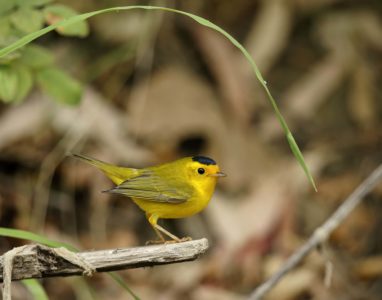
Wilson's Warbler; © Manfred Kusch

Names for Birds-Ever Changing

Many of the common, English-language names for American birds have changed repeatedly over the years.  In my time as a birder, the largest egret in Yolo County has been called American, common, and now great egret.  Yolo’s most numerous jay has been called California, scrub, western scrub, and now California

Read More

The Yolo Bypass Wildlife Area is in many respects the best all-around collection of birding sites in the county, drawing birders from far and near. Its attraction for water-oriented birds lies in part from its being the single largest remnant of the natural floodplain of the Sacramento River, often flooding in rainy winters. More important is that its land, water and vegetation are actively and continuously managed by the California Department of Fish and Wildlife to benefit birds.
About 2000 acres are leased to rice growers, and this attracts herons, ibis and other waders in the growing season, thousands of blackbirds of several species around harvest time, and 100,000 or more ducks in winter. The Wildlife Area has been able to draw its normal allotment of water this year, both for rice and for winter flooding—a blessing for the birds, because the overall rice acreage in the Sacramento Valley is smaller than usual.
Much of the Wildlife Area is managed to grow other plants that ducks eat (swamp timothy, watergrass, smartweed), and requires periodic weed suppression, by way of mowing, discing or burning. These treatments also clear the ground so that waterfowl can get access to the seeds they seek. Fields of safflower are grown to provide food and cover for wildlife.
Management also helps nesting birds. A large area of irrigated cattle pasture south of Putah Creek provides food for pheasant chicks, and wide swathes of upland vegetation offer safe nesting sites for pheasants and other birds, including savannah sparrows. Periodic flooding of such areas drives out nest predators, such as raccoons and skunks.
There is much more. If you have questions, contact Joe Hobbs, the manager of the Wildlife Area, at joehobbs@wildlife.ca.gov or 530-757-2431. Also, the Yolo Basin Foundation offers monthly tours of the Wildlife Area. Check here for more information.
Finally, I have a request for our readers. Is there a topic that you want to see covered here? If so, I can chase it down, we can work on it together, or you can research and write a column yourself. Just send me an email – michaelperrone10@yahoo.com.

Snow Geese photo by Mike Reinhart

–Michael Perrone, Conservation Chair