Conservation Corner

Conservation Corner: March 2025

Habitat projects on Yocha Dehe lands in the Capay Valley     The Yocha Dehe band of Wintun Indians holds about twenty-five thousand acres of land along the west bank of Cache Creek around the town of Brooks.  Although better known for its casino, the community also has important natural

Read More

Conservation Corner: February 2025

Demography is Destiny: Yolo County Birders Past and Present In my time as a birder–roughly the last sixty years—-I have seen three notable and delightful changes in the face of birding and of birders themselves. There are far more birders now. There are more younger birders. And more girls and women serve

Read More

Conservation Corner: January 2025

Local Biodiversity Hotspots at Risk From Climate Warming    A new study out of UC Davis highlights the biological richness of the western hill country of Yolo County and nearby areas and the grave threats to its continued existence posed by a warming and drying climate and related increases in

Read More

Conservation Corner: December 2024

Wild Turkeys in the City     Now that Thanksgiving is behind us, let’s talk turkeys.  The wild turkey is native to the eastern US, northern Mexico, and parts of the American southwest.  It probably got its odd name because it reminded early settlers of the guinea-fowl, another large chicken-like

Read More

Conservation Corner: November 2024

The Point Reyes Effect in Yolo County?       The Point Reyes peninsula is famous during migration periods for its concentrations of small birds, often including strays from much further east.  Its shape and position, a ten-mile-long westward projection into the Pacific Ocean, draws birds that have flown out

Read More

Conservation Corner: October 2024

Cooper’s Hawks Nesting in the City         Several years ago, Cooper’s hawks began to nest in my part of Davis. I surmised that these previously winter-only birds waited till there were trees tall enough to suit their nest site requirements.  This year two pairs nested near my

Read More

Conservation Corner: September 2024

Habitat Improvements by the Yolo County Resource Conservation District           One of the missions of the Yolo County RCD is to remove weeds and put bird-friendly native plants in their place, all normally done away from the spotlight.  So, I am going to shine a light

Read More

Conservation Corner: May 2024

The New Sacramento Area Checklist – Part 2     Last month I noted that the Sacramento Audubon Society has just revised its checklist of the birds of our area and made it available on its website. I set about to compare the relative abundance of each species on the

Read More

Conservation Corner: April 2024

The New Sacramento Area Checklist      The Sacramento Audubon Society has long produced checklists of the birds of the region. The checklist covers the area from State Highway 12 in the south to about State Highway 20 in the north, and extends east and west to the thousand-foot elevation.

Read More

Conservation Corner: March 2024

Hearing aids for birders – a personal story Many birders rely crucially on our ears to detect and identify birds.  But what happens when our ears start to wear out?  As we age, our capacity to hear higher-pitched sounds diminishes.  The result is that many bird calls must be closer to

Read More

Conservation Corner: February 2024

A Contemporary Aid for Bird-Finders     In the quiet corners of Yolo County, a passionate group of bird enthusiasts embarked on a quest to uncover the mysterious world of owls. Armed with binoculars, field guides, and an insatiable curiosity, they ventured into the diverse landscapes that make up this

Read More

Conservation Corner: January 2024

            California Chaparral and its Birds at Risk     Regardless of how we regard global warming or the climate crisis, there is no doubt that wildfires have grown massively in frequency and intensity in California in the twenty-first century.  On the broad line of

Read More

Habitat projects on Yocha Dehe lands in the Capay Valley

    The Yocha Dehe band of Wintun Indians holds about twenty-five thousand acres of land along the west bank of Cache Creek around the town of Brooks.  Although better known for its casino, the community also has important natural resources to watch over.  The tribe uses native plants for food and medicine, and for construction of items such as baskets.  Unhappily, the land all along the creek has been occupied for decades by non-native weedy plants, especially giant reed (Arundo) and tamarisk.  These species prevent establishment of desirable native plants and are much less suitable as habitat for birds than the natives.
   Recognizing the benefits and uses of native plants, the tribe has set out to clear away the woody weeds, mainly by grinding them up, and planting natives in their stead.  The ever-growing species list includes oaks, willows, cottonwood, elderberry, redbud, mulefat, mugwort, several grasses and sedges, and many more.  Leading the effort are botanists from the Yolo County Resource Conservation District, the same entity that has done so much habitat restoration around the county.  In spaces unsuitable for large-scale restoration, such as along roadsides and on the borders of crop fields, the RCD has established hedgerows of native plants, now totaling a mile’s worth, with more to come.
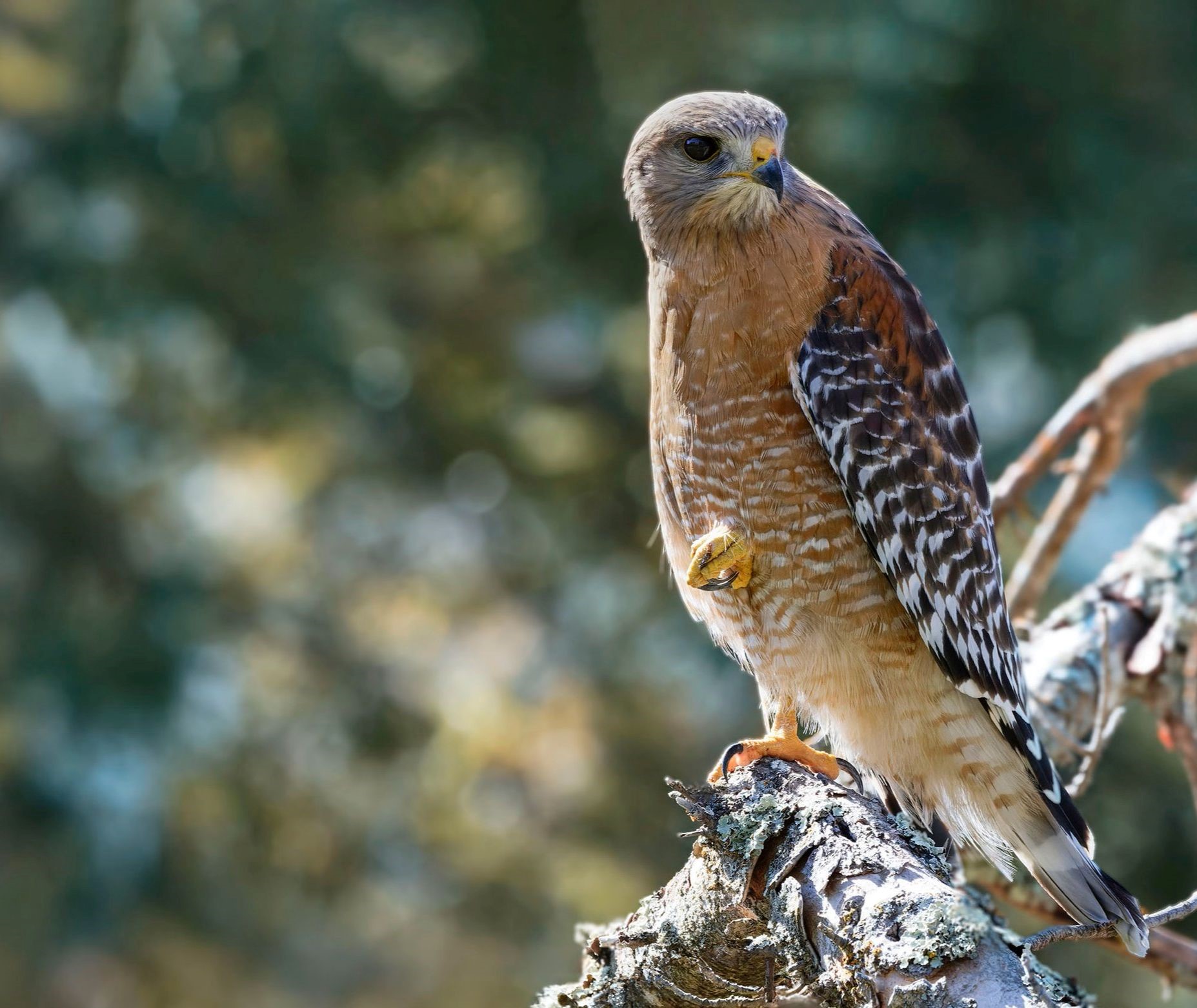
     Natural resource management responsibilities on the property include teaching about the presence and importance of the local plant and animal life.  For example, a field day for community members has been planned for April to include a morning bird walk near the creek and an afternoon visit to the habitat restoration site.  Yolo Bird Alliance has agreed to lead the bird walk, in coordination with Audubon California.  YBA intends to provide loaner binoculars and a few hard-cover birding field guides for the tribe to keep.  Other cooperative ventures, such as placement of nest boxes for songbirds, seem feasible.
   The natural resources staff for the tribe are Sarah Morgan and Nancy Ye, who graciously showed us around the property in February.  Contact Sarah here.  The lead person for the Yolo RCD work is Noreen Mabini, who can be reached here.  Much more information about the tribe and its activities can be found at yochadehe.gov.

–Michael Perrone, Conservation Chair