Conservation Corner

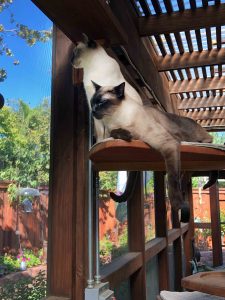
The 'catio' keeps cats and birds separated; © Lynda Goff

Feral Cats and Wild Birds: Part II

Our February article described the huge losses that cats inflict on wild birds in California and around the country. Recognizing this as an important conservation problem, YAS explored the issue further. We talked to key people at the County animal shelter in Woodland, the UC Davis School of Veterinary Medicine,

Read More
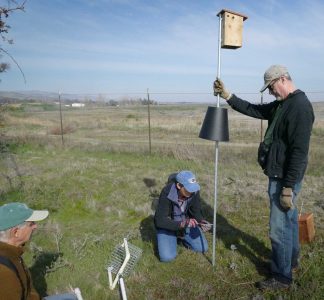
YAS Board Members Michael Perrone, Sonjia Shelly, and John Hansen installing bluebird boxes at Capay Open Space

Yolo Audubon and the Capay Open Space Park

In November 2018 this column discussed ongoing and planned habitat improvements at the Open Space Park on Cache Creek, along County Road 85 just north of the town of Capay. Now I am happy to report on the success of the project, which has had help from YAS. The forty-acre

Read More
Indoor Cat Birdwatching

Feral Cats and Wild Birds

A recent study by the Smithsonian Institution and the US Fish and Wildlife Service estimated that domestic cats kill about 2.4 billion birds and 12.3 billion small mammals each year in the lower forty-eight states.  This is far higher—and probably more accurate–than previous figures, and likely exceeds all other sources

Read More
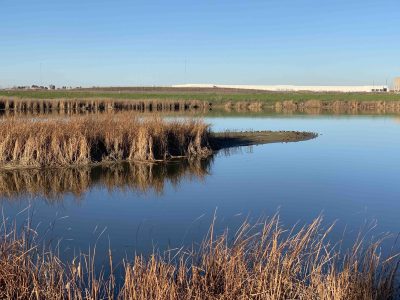
Bridgeway Island Pond; © Ann Brice

Bridgeway Island Pond meets Industrial Development

Bridgeway Island Pond is a birding hotspot in the Southport area of West Sacramento, famous for its excellent close-up views of an assortment of waterfowl, waterbirds and shorebirds. The pond and adjacent marsh often attract more Blue-winged Teal than any other place in northern California, and last spring it hosted

Read More
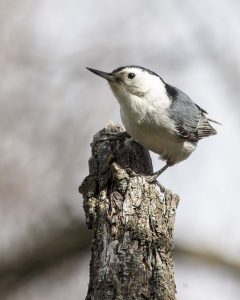
White-breasted Nuthatch; © Erna Tarara

Bird Trends at the Putah Creek Riparian Reserve

The Putah Creek Riparian Reserve, owned and managed by UC Davis, is a well-known birding spot. The publicly accessible Yolo portion is on the north bank of the creek, mainly between County Road 98 (called Pedrick Road in Solano County) and Brooks Road. The Reserve was established in 1983. We

Read More
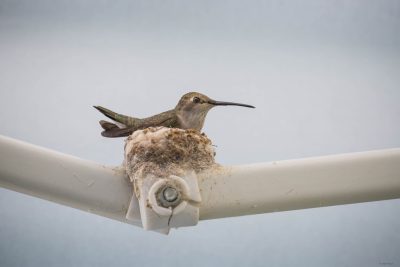
Black-chinned Hummingbird at Nest; Davis; © Deb Ford

Breeding Bird Atlases

Projects to map the distribution of breeding bird species in a given area have covered numerous California counties. Called breeding bird atlases, they describe abundance, timing of breeding, and aspects of life histories. Trained citizen scientists do the field work. Their observations are synthesized into species accounts and maps, which

Read More
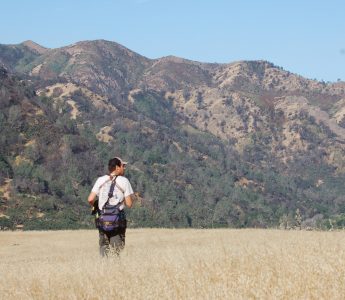
Photo courtesy Corey Shake

The Natural Resource Conservation Service in Yolo County

From a modest office near downtown Woodland, the USDA Natural Resource Conservation Service (NRCS) and its local partner, the Yolo County Resource Conservation District, help farmers and ranchers with a range of business matters. More importantly for Yolo Audubon, they also help rural landowners create and improve habitat for birds.

Read More
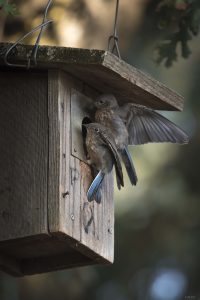
Juvenile Western Bluebirds; © Deb Ford

Nest Boxes in the City

A while ago I wrote about the marvelous success of the nest box installation program along Putah Creek masterminded by Yolo Audubon’s own Melanie Truan. Over the years, those nest boxes have produced nearly fourteen thousand fledgling Tree Swallows, Western Bluebirds, Ash-throated Flycatchers, House Wrens, and others. The effort has

Read More
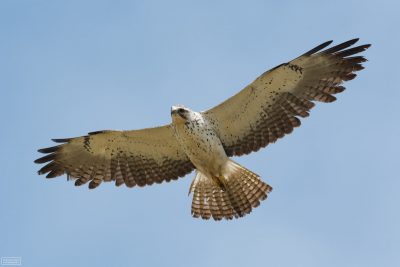
Swainson's Hawk, © Deb Ford

Conservation in the Yolo Habitat Conservancy

The Yolo Habitat Conservancy is the County agency charged specifically with protection of native species and their habitats, as well as management of environmental permits for development in the County and its cities. Toward that end, the Conservancy spent several years developing a combined federal Habitat Conservation Plan and state-level

Read More
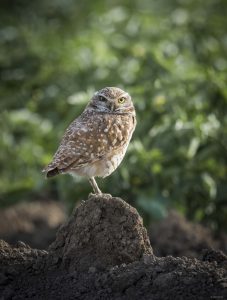
Burrowing Owl, Yolo County (Deb Ford)

Burrowing Owls at Risk on the Urban Fringe

The Burrowing Owl is the only bird of prey in the Sacramento Valley that nests underground, usually in abandoned ground squirrel burrows and most often on the edges of farm fields. Farmland on the border of cities is where most development occurs; Burrowing Owl nest sites are lost as building

Read More

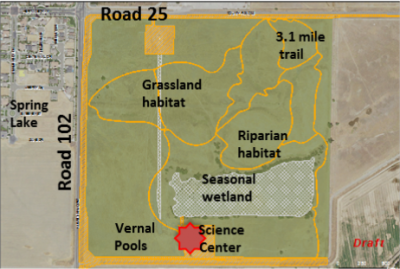
Woodland Regional Park

Over the past few years, the City of Woodland and a partnership of local nonprofit organizations, including Yolo Audubon, have been working to design a park and nature center along Road 102, just south of Woodland. Owned by the City, Woodland Regional Park occupies 160 acres at the site of

Read More
River Otter at Yolo Bypass (Deb Ford)

A Wildlife Corridor in the Yolo Bypass

An abandoned railroad trestle in the southern part of the Yolo Bypass Wildlife Area is getting a new look as part of a habitat restoration project led by the Yolo County Resource Conservation District. The earthen mounds originally designed to elevate a train track will now provide refuge from rising

Read More

Our February article described the huge losses that cats inflict on wild birds in California and around the country. Recognizing this as an important conservation problem, YAS explored the issue further. We talked to key people at the County animal shelter in Woodland, the UC Davis School of Veterinary Medicine, the Yolo County SPCA, and the City of Davis, among others.

Two lessons were reinforced. First, don’t abandon your unwanted cat. Contact the local SPCA (through its website) for advice on finding a new owner. If that doesn’t work, take the cat to the County animal shelter, where it will be kept safe. If you catch a feral cat, the shelter will neuter it for free, if you make an appointment to do so. You must return such cats to where you found them.

Second, don’t feed cats that you don’t own, unless you are sure they have been neutered. Otherwise, feeding them simply helps them have more kittens. Nationwide, this results in a great many more unwanted kittens, because roughly one in seven people feed feral cats.

For those one in seven, the website of the Shelter Medicine Program at the UC Davis vet school has several suggestions for ensuring that you feed only the cats you have identified as needing care. You can read about those suggestions here.

YAS would like to get these lessons to a wider audience. We are looking into working with organizations that teach school children about nature and science, including Explorit Science Center, Yolo Basin Foundation, and the educational partnership for Woodland Regional Park. Topics about birds and cats could be part of a curriculum for impressionable minds. If you are interested, please let me know.

In closing, note that stray cats are a result of our consumer culture, one that urges us to throw away the things we no longer want. It is no surprise that Yolo County birders find feral cats and discarded furniture on the same roadsides.

Michael Perrone, Conservation Chair, YAS