Conservation Corner

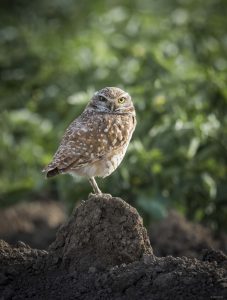
Burrowing Owl, Yolo County (Deb Ford)

Burrowing Owls at Risk on the Urban Fringe

The Burrowing Owl is the only bird of prey in the Sacramento Valley that nests underground, usually in abandoned ground squirrel burrows and most often on the edges of farm fields. Farmland on the border of cities is where most development occurs; Burrowing Owl nest sites are lost as building

Read More

Woodland Regional Park

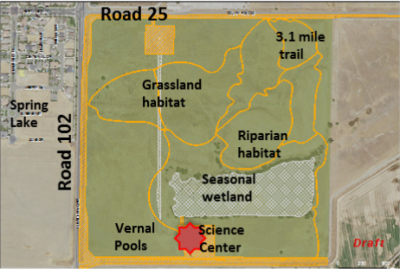
Over the past few years, the City of Woodland and a partnership of local nonprofit organizations, including Yolo Audubon, have been working to design a park and nature center along Road 102, just south of Woodland. Owned by the City, Woodland Regional Park occupies 160 acres at the site of

Read More
River Otter at Yolo Bypass (Deb Ford)

A Wildlife Corridor in the Yolo Bypass

An abandoned railroad trestle in the southern part of the Yolo Bypass Wildlife Area is getting a new look as part of a habitat restoration project led by the Yolo County Resource Conservation District. The earthen mounds originally designed to elevate a train track will now provide refuge from rising

Read More
Fremont Weir Wildlife Area

Public Access to Public Lands: Fremont Weir Wildlife Area

As noted here before, the conservation goals of Yolo Audubon are to protect and expand local bird habitat and ensure public access to that habitat, wherever possible. The situation at Fremont Weir Wildlife Area is unusual in that a formerly accessible public recreation area is now much harder to get

Read More
Lower Elkhorn Basin Levee Setback Project

The Lower Elkhorn Basin Levee Setback Project

Projects that involve water or flood management are typically contentious almost anywhere in California. Nevertheless, a plan to widen the Yolo Bypass on its east side, in the lower Elkhorn Basin, is heading smoothly toward construction. It has support from the Yolo County Board of Supervisors and the affected landowners.

Read More
Lesser Nighthawk at Capay Open Space, © Deb Ford

Capay Open Space Park

Last winter I discussed the Cache Creek Parkway Plan and the Cache Creek Conservancy and Nature Preserve as parts of an effort to improve and expand habitat and public access along the reach of the creek between Roads 85 and 96B. I can now report on a second on-the-ground element

Read More
Southport Levee Improvement Project, © SkyHigh Perspectives, used with permission.

Bird Habitat and the Southport Levee Improvement Project

The City of West Sacramento is in the middle of a major upgrade to flood protection along the Sacramento River. Rather than relying on the riverside levee that South River Road sits atop, it is building a much wider levee, and setting it back a hundred yards or so from

Read More

Birding In Your Own (Urban) Backyard

Although backyard birding in the city is not as thrilling as in more natural landscapes, it can offer conservation lessons. I began to bird in Slide Hill Park in Davis in 1986, when the park was fairly new and the vegetation was still young. I have watched the various groves

Read More
Golden Eagle ; Jim Dunn

Wind Turbine Development at Bogle Vineyards

On 25 April 2014 Yolo Audubon Society filed a lawsuit together with Tuleyome and a group of local landowners against Yolo County and the Board of Supervisors challenging the county’s approval of a wind turbine development on Bogle Vineyards, the county stating that no environmental impact report was needed via

Read More

Putah Creek Nest-Box Highway

This month I want to report on a bird conservation success story that is as close to home as Putah Creek. Yolo Audubon’s own Melanie Truan came up with the idea and made it happen, and has ensured its continuation ever since. Working at the UC Davis Museum of Wildlife

Read More

The Burrowing Owl is the only bird of prey in the Sacramento Valley that nests underground, usually in abandoned ground squirrel burrows and most often on the edges of farm fields. Farmland on the border of cities is where most development occurs; Burrowing Owl nest sites are lost as building proceeds.

It is lawful to destroy owl burrows during property development, so long as no owls are killed. The fate of owls subsequently driven away is typically unknown. When owl habitat is destroyed, the developer is required to pay for or provide another parcel of land that either has or could support Burrowing Owls. The developer must also encumber it with use restrictions that prevent loss or deterioration of the habitat.

However this mechanism fails to add a single acre of occupied owl habitat to the landscape. Thus, development and its mitigation requirements are normally a net loss for the birds.

A development proposal on the east edge of Davis, the Mace Ranch Innovation Center, typifies the situation. The project includes land on which Burrowing Owls have nested recently. As it happens, the City of Davis owns the parcel with the owl burrows.

The parcel was purchased with funds from Proposition O, a voter-approved ordinance designed specifically to preserve open space and wildlife habitat on the urban fringe. Ironically, it appears to be legal for the City to sell Proposition O land for development. Indeed, the City has shown no discomfort at the prospect.

Yolo Audubon and other conservation groups are contacting the City Council with our concerns about losing yet more owl habitat. Recently the Mace Ranch Innovation Center was put on hold for reconsideration by its proponents. It remains to be seen whether a revised project will leave out the parcel in question.

Michael Perrone, YAS Board, Conservation